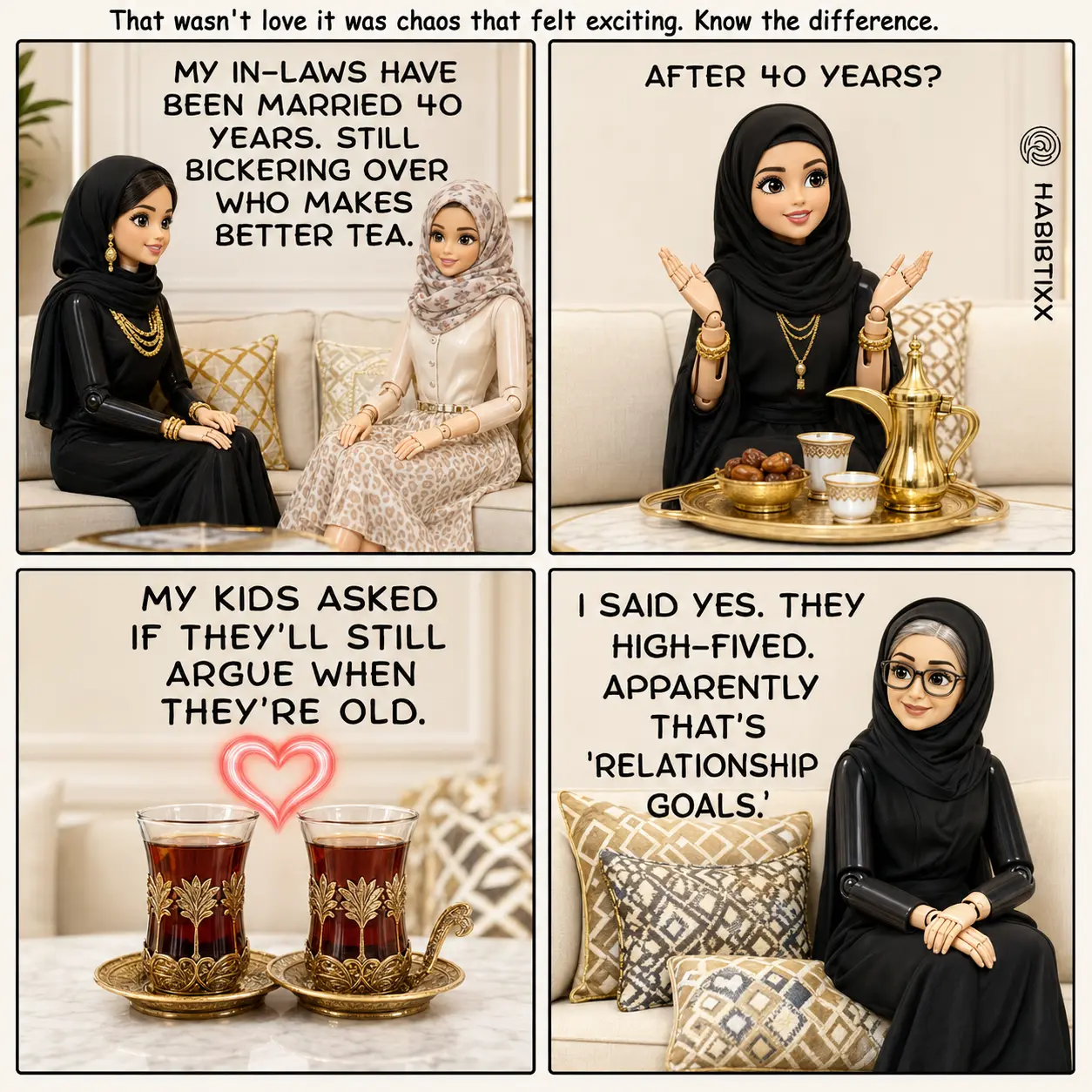
Forty years married and still arguing.
For one generation, that can look like endurance and commitment. For another, it can raise a much harder question: why stay in a relationship that has involved so much conflict?
Part of the answer is that marriage has not always been understood in the way many people understand it now.
Traditionally, marriage was often about building and protecting a family unit. It could secure social standing, connect families, provide financial stability, establish a home for children and create responsibilities that lasted far beyond how either husband or wife happened to feel at a particular point in their lives.
Personal happiness mattered, but it was not necessarily the main test of whether the marriage was working.
A couple could disagree often, go through difficult periods, disappoint each other and still believe the marriage itself was sound. The relationship was judged within the bigger life they had built together.
Modern marriage places far more emphasis on the experience of the individual inside it. Emotional compatibility matters more. So does feeling understood, respected, fulfilled and happy with the life you are living.
That changes the meaning people attach to conflict.
A person raised with a more traditional view may see recurring disagreements as part of sharing a life with another imperfect human being. A partner raised around a modern idea of relationships may start asking whether repeated conflict means the relationship is no longer healthy or compatible.
Neither approach should be romanticised.
Traditional marriage could keep people trapped in relationships they desperately needed to leave. Modern thinking has given people much more permission to recognise mistreatment, unhappiness and incompatibility.
At the same time, a marriage does not automatically become unsuccessful because two people have struggled, argued or gone through periods when neither of them felt particularly happy.
This difference can become very noticeable when people marry across cultures, generations or very different family backgrounds. It can also happen when one person has spent years studying or living in an environment where relationships are understood differently from the home they grew up in.
Two people may love each other and still be working with completely different definitions of what marriage is supposed to provide.
That is often where the confusion begins.